


Competitive table tennis player brings lessons from the mental game to the future of his field
Dr. Alan Chu, AP associate professor of applied sport psychology in UNC Greensboro’s School of Health and Human Sciences, learned firsthand how mental preparation can affect athletic performance. Now he’s taking a national leadership role in helping shape how sport psychology is researched, taught, and practiced in the years ahead.
A Leadership Role with the AASP
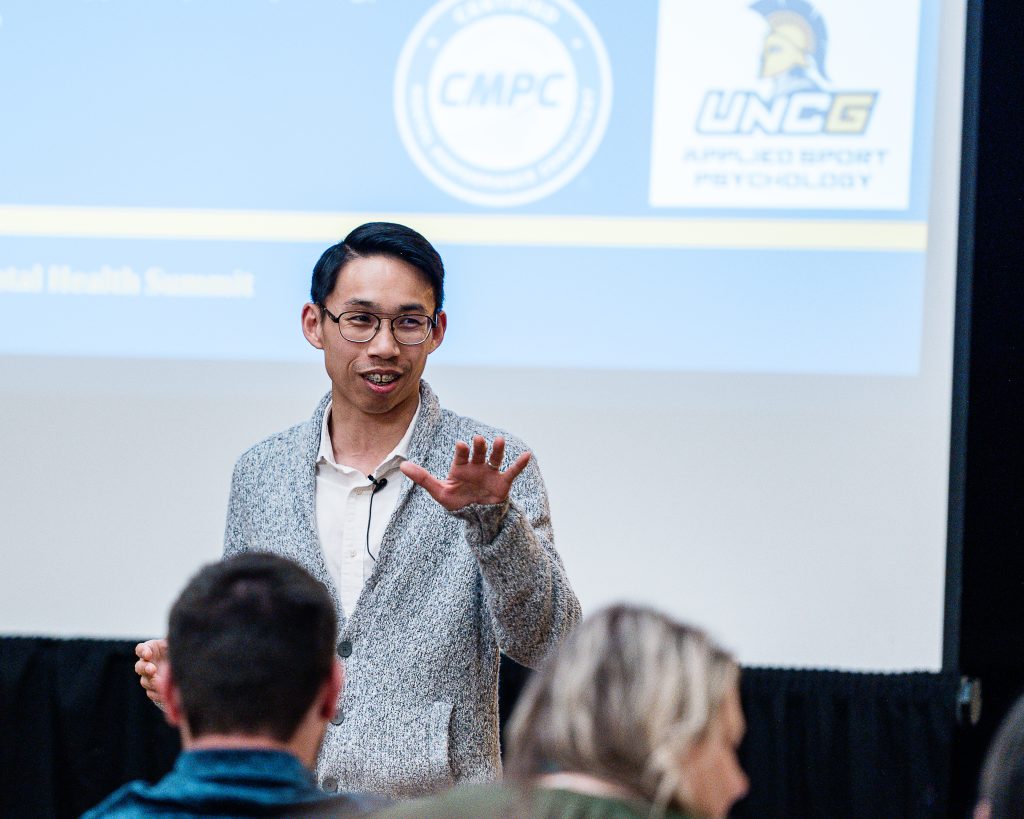
In July, Chu was elected as head of the Research and Practice Division of the Association for Applied Sport Psychology (AASP) by its members. This executive board position recognizes years of research, professional service, and applied work in sport psychology. AASP is the leading professional organization in North America for sport psychology practitioners and researchers.
A member of the AASP since 2012, Chu has already served the association in numerous roles, most recently as chair of the Science to Practice Committee, which promotes applied research and innovative projects that advance sport psychology.
“I’m just really excited,” Chu says. “AASP is my professional home. I served as a student delegate when I was a PhD student, and I have been a member of one committee or another. So, it’s nice to see that I’m being recognized and asked to step up.”
Learning the Mental Game
Chu’s journey into sport psychology began in Hong Kong, where he grew up and learned the sport of table tennis. He played competitively starting at age 5, reaching an early peak when he was invited to try out for the junior national team while still in high school.
“I was supposed to have a good chance to make it, but I lost my first match,” he says. “And I was beating myself up over that, so I lost more matches than I should have. That caused me to reflect and understand how important it is to have mental preparation.”
Chu did not make the junior national team in that outing; in his disappointment, he considered dropping out of the sport. “That was my first milestone, from the negative side,” he says. “But the second milestone was positive.”
It happened while he was a student at the City University of Hong Kong, where he earned a bachelor’s of social science in psychology. The school had a table tennis team, and he decided to try out as a walk-on. He made the team and, in doing so, learned about much more than just drop shots and topspin: He found himself in a supportive environment that helped shape his goal of working with athletes and others on the mental side of competition.
He played through his undergraduate years, eventually becoming captain and leading the team to a national championship.
“It was a really good team environment,” he remembers. “The coach also made a big impact on me. She talked to me like I was more of a person than an athlete.”
The Long Road to UNCG
After earning advanced degrees in counseling and educational psychology in the United States, Chu began his faculty career at the University of Wisconsin-Green Bay, where he led the Sport, Exercise, and Performance Psychology program. He came to UNCG because it offered something he had been seeking throughout his career: a place where research and applied work could intersect.
“UNCG has a fantastic sport psychology program, both for research and applied psychology,” Chu says. “I am always looking for opportunities to do both research and applied work with the community. I found that here. And I got to meet different UNCG faculty, including Dr. Diane Gill, who just retired from UNCG two years ago.” Gill, who spent 38 years at UNCG, is a trailblazer in the field of sport and exercise psychology.
Chu teaches classes, mostly at the graduate level, and is currently working with a PhD student and several master’s students in applied sport psychology. He has applied his own research to create the SMART Program, an acronym that stands for Self-compassion, Mindfulness, and Athletes’ Resilience Training. It’s an 8-week program that helps athletes perform both on the field and in life. He teaches these skills in the community in places like the YMCA and BetterUp, an online company that uses the principles of sport to coach business executives.
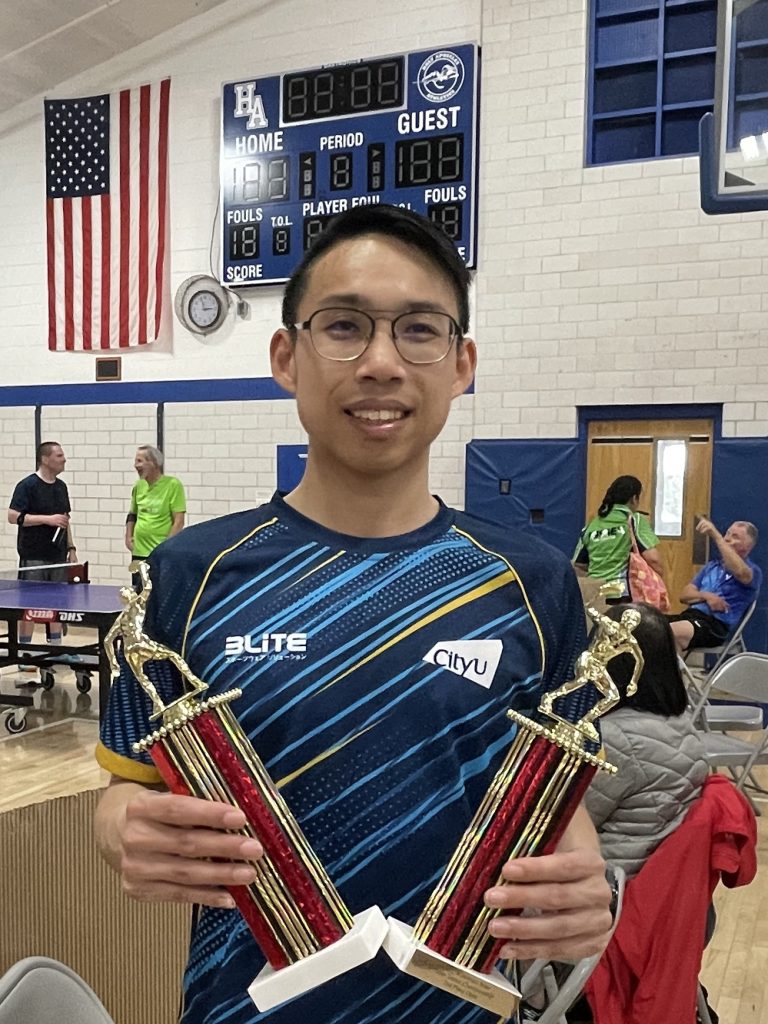
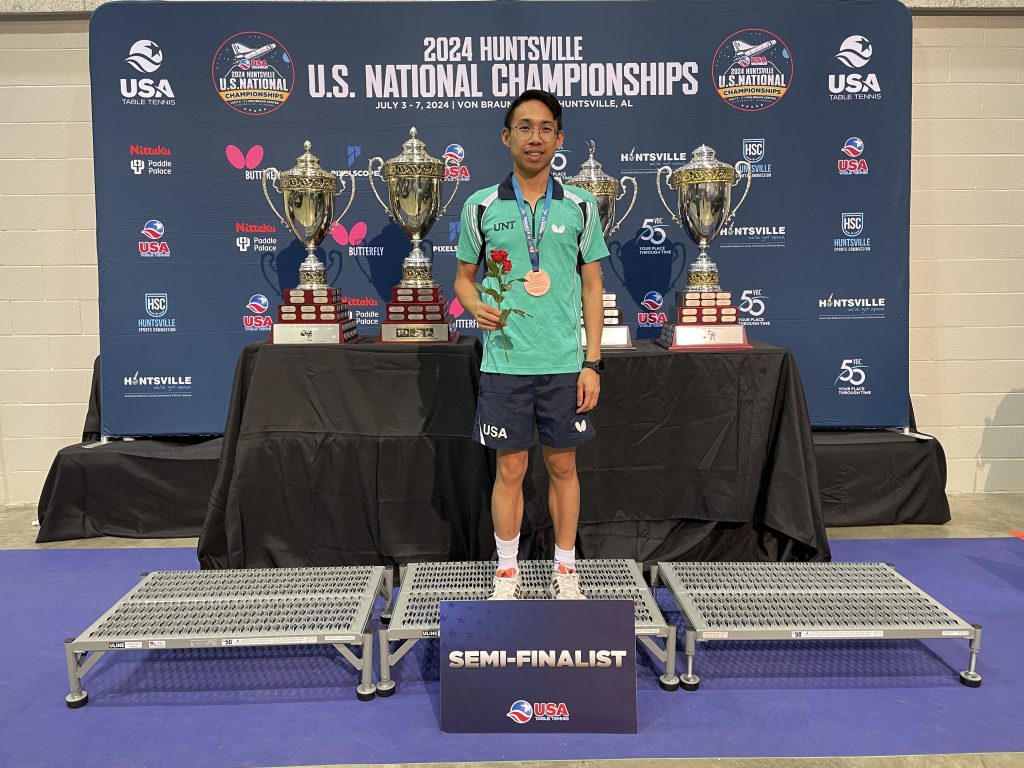
And then there is table tennis, which Chu still plays competitively.
“North Carolina is one of the top four or five states for table tennis,” he says. “There’s a facility in Apex where I train with several current or former junior national team members.”

A Mandate to Oversee Accreditation
As head of the AASP Research and Practice Division, Chu says one of his most important tasks is to oversee the accreditation of graduate programs within his discipline. Accreditation sets a standard in qualifications for all students seeking advanced degrees in sport psychology.
“Accreditation is something pretty common in programs like psychology, athletic training, or physical therapy,” he says, “but in sport psychology, we didn’t have any accreditation. So, the AASP started an accreditation process last year, making sure that students who go through these programs get the training that they need to be qualified professionals.”
The AASP accreditation window opened in January 2025. Chu says the accreditation process is directly relevant to the graduate students he teaches at UNCG.
“The whole idea is turning the inner critic into the inner coach,” he says. “It goes back to that moment when I tried out for the junior national team in Hong Kong. Instead of beating ourselves up as the inner critic, how do we find the inner coach in that moment to talk to ourselves and coach through adversity?”
Story by Brian Clarey, University Communications
Photos by Sean Norona, University Communications and courtesy of Dr. Alan Chu and
From the inner critic to the inner coach